Floating Home Project

British Columbia, Canada
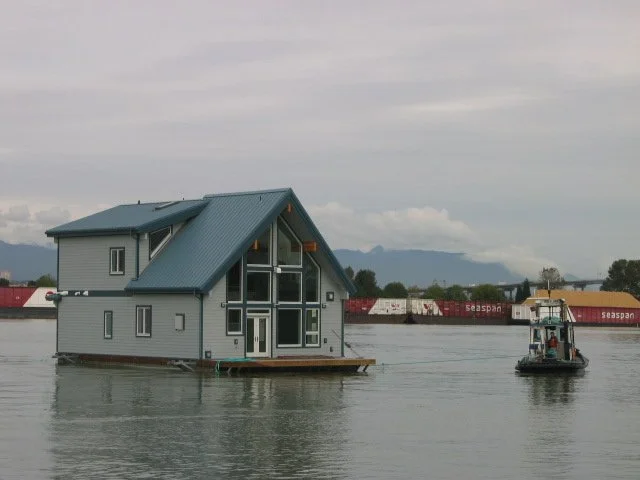
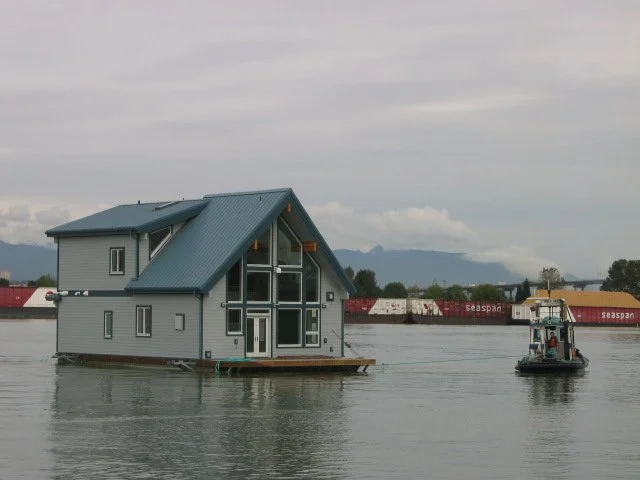
A floating house on a body of water with a small boat nearby, mountains in the background, cloudy sky.

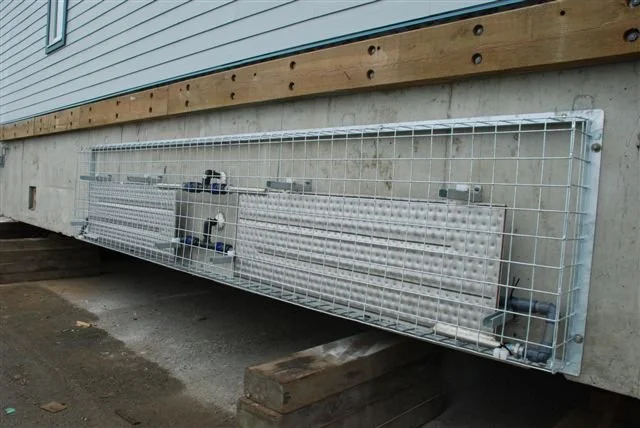
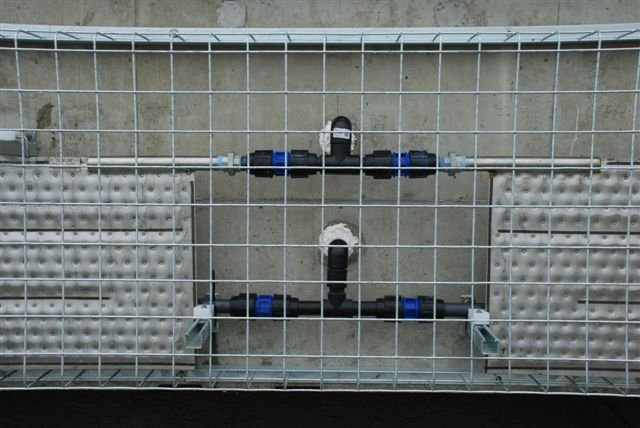
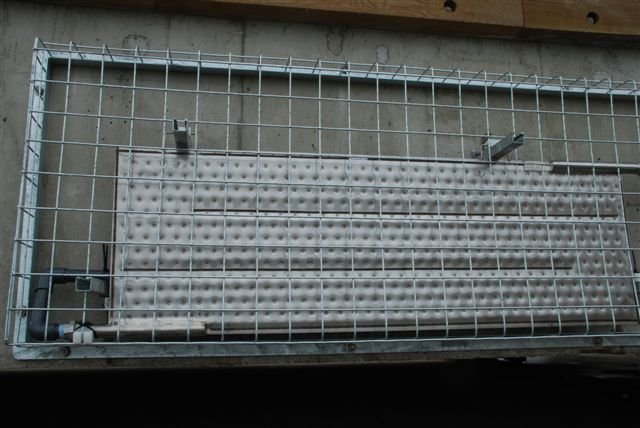
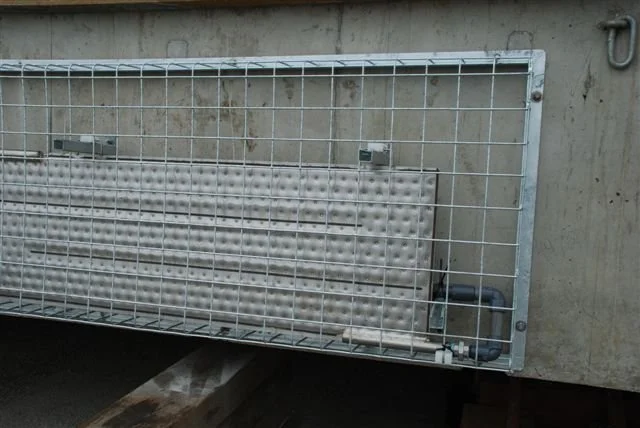
During this project, a 4 Ton (HR) Geo Lake Plate heat exchanger was installed onto the side of a houseboat and "hardwired" to the HVAC system.

5 Benefits of Using Geothermal Systems for Floating Homes:

  1. Energy Efficiency: Geothermal systems are highly efficient and can provide both heating and cooling, reducing energy consumption and utility costs.

  2. Environmentally Friendly: Geothermal systems produce minimal greenhouse gas emissions and are considered a more eco-friendly heating and cooling option.

  3. Reliability: Geothermal energy is a constant and stable heat source, making it a reliable option for year-round comfort.

  4. Quiet Operation: Geothermal systems are quieter compared to traditional HVAC systems, which can be advantageous for a peaceful living environment on a floating home.

  5. Longevity: Geothermal systems are known for their long lifespan and require minimal maintenance.
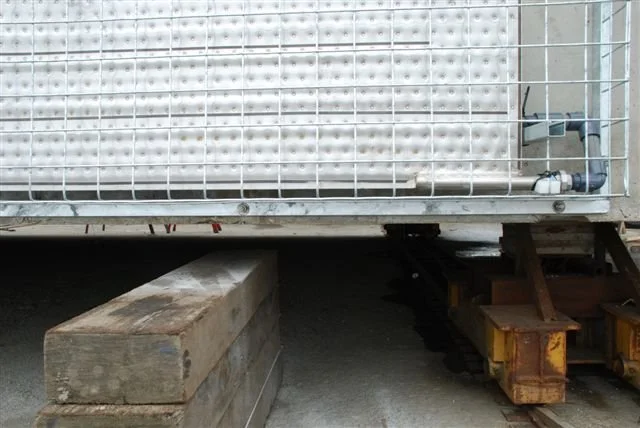
Close-up of a mobile cooling unit or air conditioning unit, with a visible drain pipe, on a flat surface supported by large wooden and metal blocks.
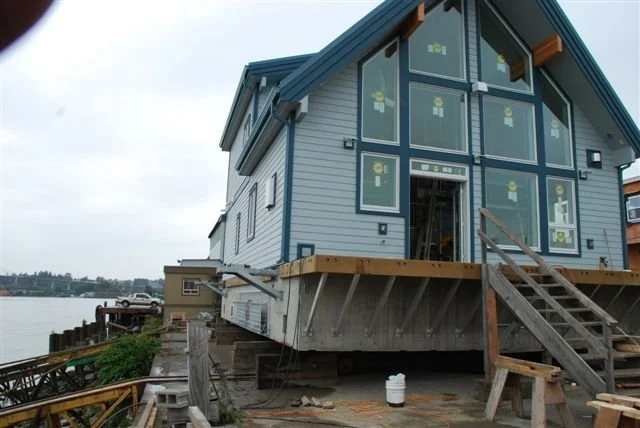
A two-story house under construction on a waterfront, with large glass windows and a deck with stairs leading down.
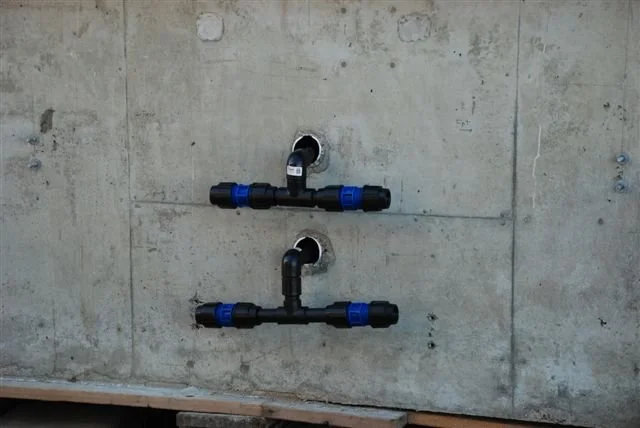
Two black and blue plastic plumbing fittings attached to a concrete wall, with pipes connecting to wall openings.
Floating house on water with a tugboat nearby against a cloudy sky.
Construction site showing a building with a protective metal cage installed underneath, containing tools and construction materials.
Installed filtration system inside a metal wire basket with a concrete wall background.
A grid-like metal cage with electronic equipment inside, mounted on a concrete wall.
A white metal wire cage attached to a concrete wall with insulation panels inside.