
Walsh Bay Arts District
Sydney Harbor, Australia
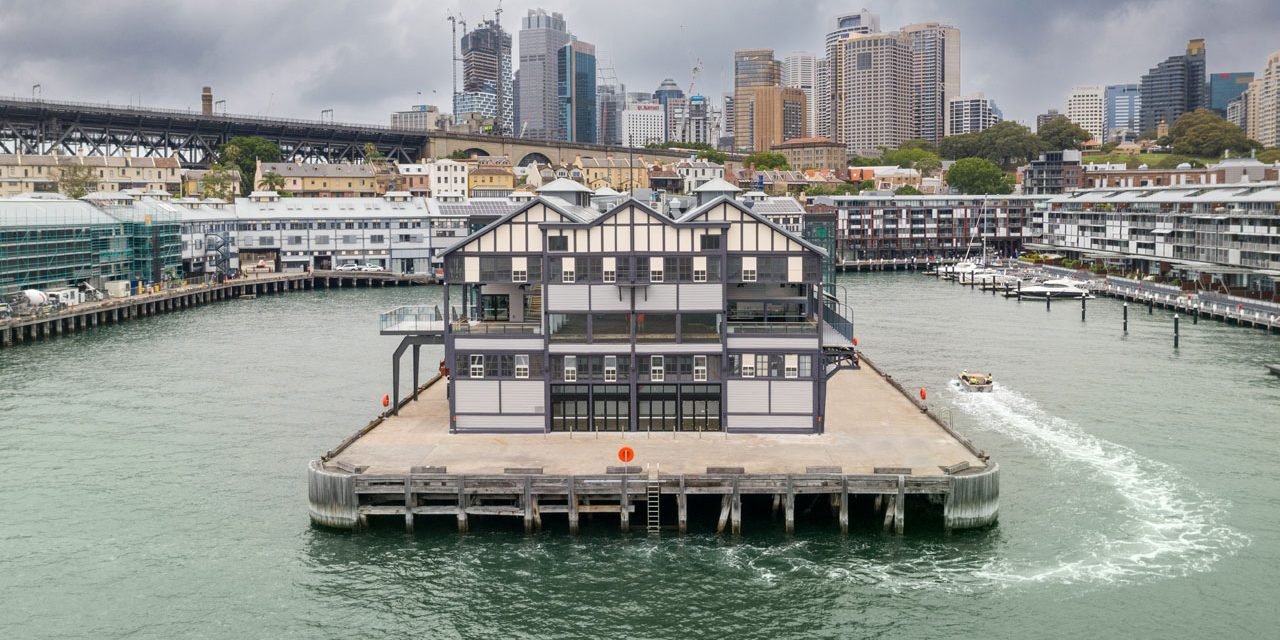
The redevelopment of the Walsh Bay Arts Precinct on Sydney Harbor is not only preserving the wharf’s heritage but has incorporated renewable thermal energy to deliver energy–efficient cooling to the facility.
SEAWATER ADVANTAGES
The adoption of the seawater cooling system at Walsh Bay Wharf 4/5 offered a number of advantages including:
Incorporating heritage compliance, the system ensures energy savings, especially during peak periods, while also delivering excellent acoustic performance. Additionally, it eliminates legionella control and prevents corrosion associated with rooftop equipment, all the while operating as a closed-loop system with no water consumption.



Heritage Compliance
Acoustic Performance


Energy Savings
Water Conservation


Legionella Control
Corrosion Prevention
This Mega Project marks the first of its kind in Australia, signifying a groundbreaking leap forward for the nation's innovative endeavors.
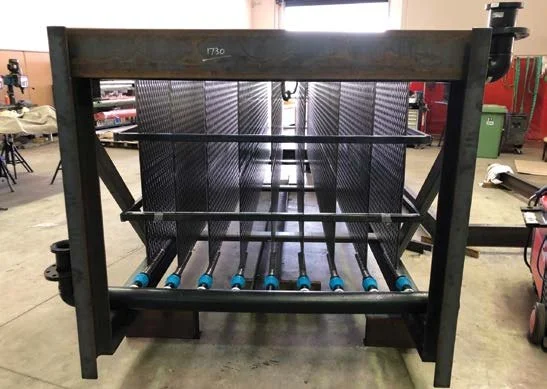
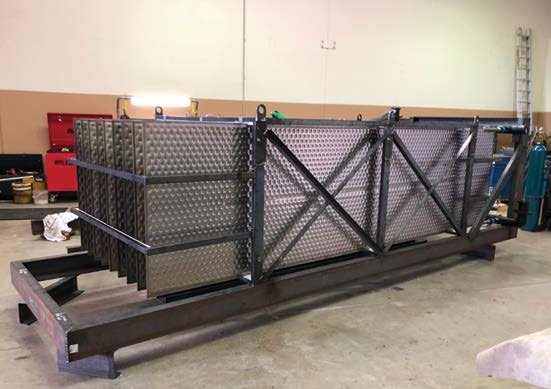
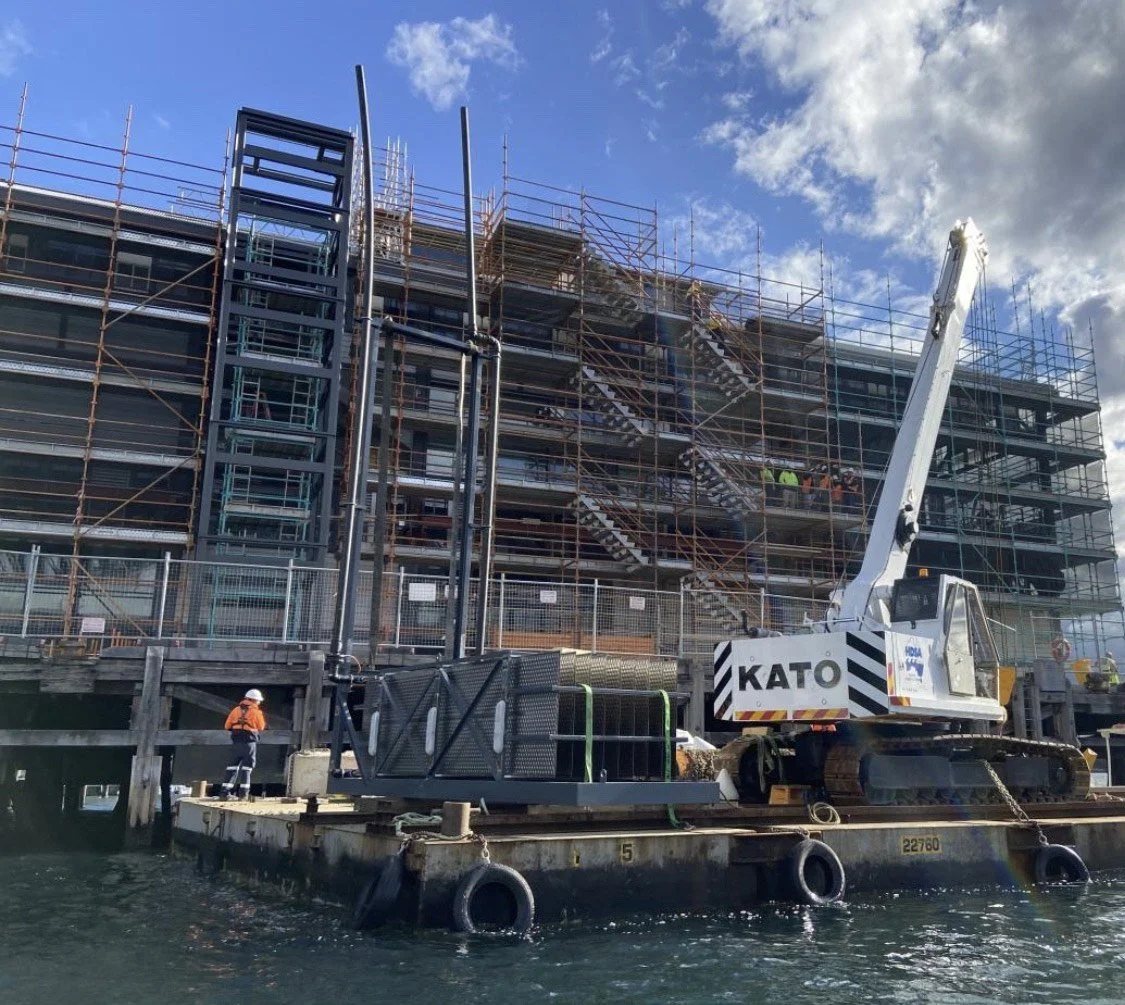
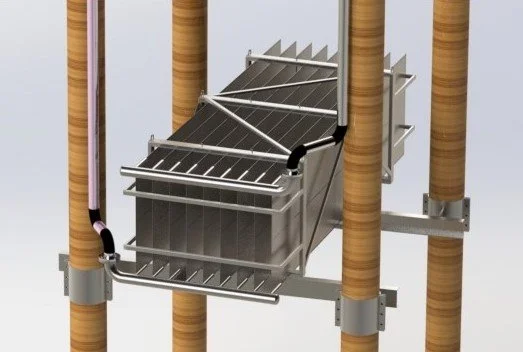
The seawater cooling system serving Walsh Bay Wharf 4/5 represents the first use of titanium plate heat exchangers of this type in Australia. “Previous systems, such as the Wharf Terraces at Woolloomooloo, and the Sydney Water Police station utilized PE (polyethylene) coils,” says GeoExchange Australia’s Yale Carden, M.AIRAH. PE coils were not deemed suitable at Walsh Bay because they require a significantly larger installation area to achieve the equivalent thermal capacity. “This would have made installation between the non-uniform pylons very difficult,” Carden says. “But PE coils also would have required a significantly higher number of joints, pipework and supporting systems.”
AN AUSTRALIAN FIRST
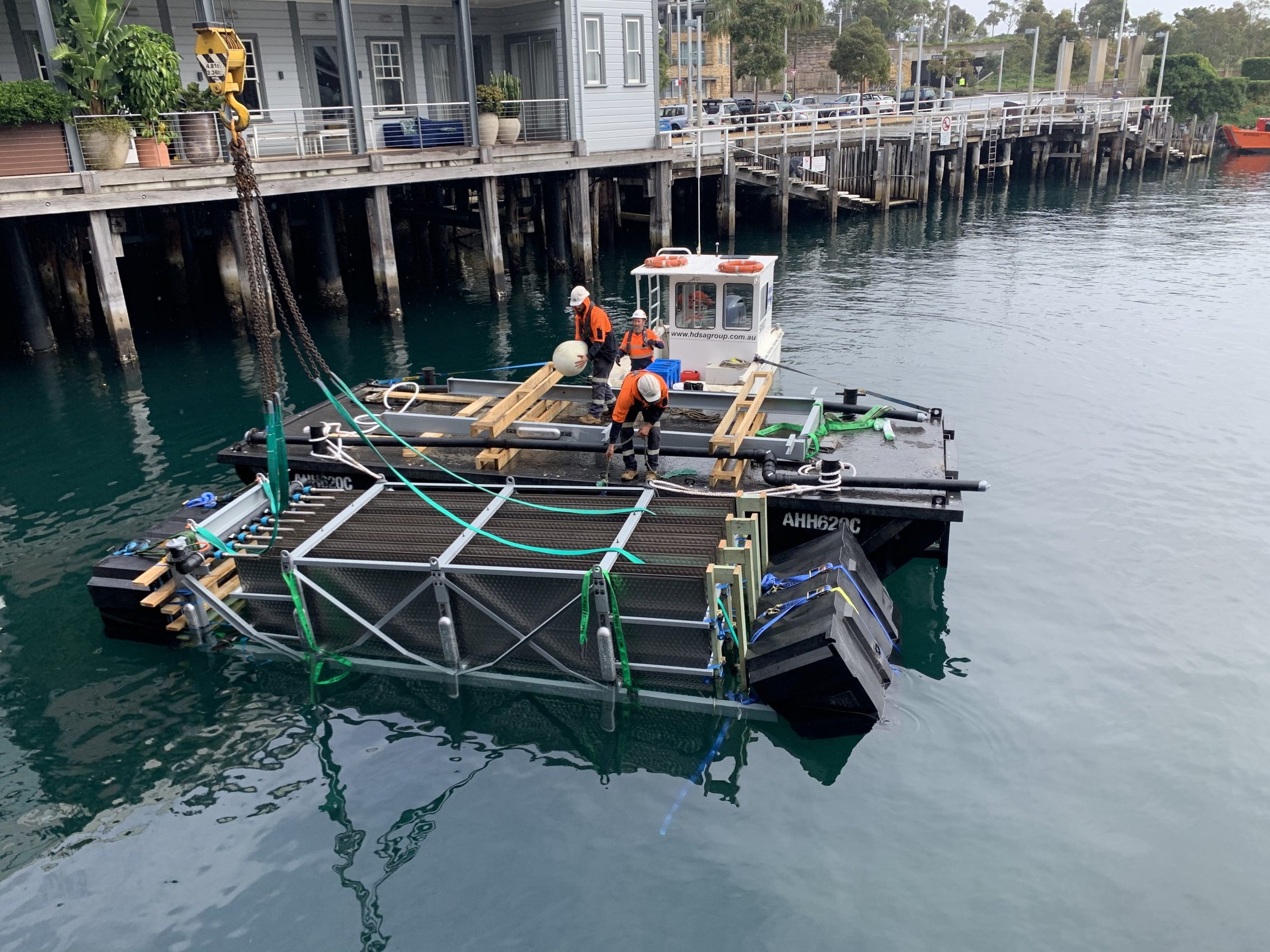
The over-water demolition and construction created a number of unique challenges in respect to protecting the marine environment below.
Spill management techniques, such as the installation of bunding and spill kits, were employed to prevent spills into the harbour. Extensive surveying, recording of pile locations and structural strengthening works were also undertaken to minimise works to the seabed.
PROTECTING THE ENVIRONMENT
PROJECT DETAILS & DESIGN INFORMATION